
Can Air Tags and Location Trackers Lead To a Restraining Order
AirTag Stalking and Restraining Orders in New Jersey
How AirTags Differ From Traditional GPS Trackers
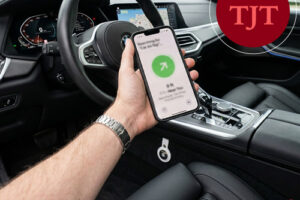 AirTags and similar Bluetooth tracking devices, such as Tile and Samsung SmartTag, work differently from traditional GPS trackers. They are generally smaller, less expensive, and easier to hide. Rather than relying on their own GPS receiver and cellular connection, they use nearby phones and devices connected to networks such as Apple’s Find My network to help report their location.
That’s why these devices are so easy to use without someone else knowing they’re there. An AirTag can be slipped into a purse or backpack, sewn into clothing, put in luggage, or taped underneath a vehicle or inside part of the car. Since the device itself is small and doesn’t require a separate cellular subscription, someone may be able to hide it more easily than with a conventional GPS unit.
Traditional GPS tracking raises many of the same privacy, consent, stalking, and evidentiary concerns in restraining order cases, but the technology and legal analysis can differ depending on how it was used. See our existing article on GPS tracking and restraining orders for a more detailed discussion of conventional vehicle and GPS monitoring.
How AirTag Stalking Is Discovered in New Jersey
Many people do not discover an AirTag because they physically find the device first. Instead, their phone warns them that an unfamiliar tracker appears to be traveling with them. On an iPhone, Apple may display alerts such as “AirTag Found Moving With You” when an AirTag that is separated from its owner has been detected moving with the user over time. The alert can lead to a map showing where the device was detected and provide options for locating or disabling it.
Android phones now provide similar protection through built-in unknown tracker alerts. On supported Android devices, the system can notify a user when an unfamiliar compatible Bluetooth tracker appears to be moving with them. The user can then view where the tracker was detected, make it play a sound, save identifying information, and take steps to disable it.
These protections are relatively recent. Apple introduced anti-tracking features after AirTags came to market, and Apple and Google later worked together on an industry standard designed to detect unwanted Bluetooth tracking across both iOS and Android. In May 2024, Apple expanded cross-platform detection through iOS 17.5 while Google implemented compatible alerts on Android 6.0 and later.
That technological change is one reason AirTag stalking is easier to uncover than it once was. Conduct that might previously have remained hidden can now produce a warning on the targeted person’s phone, creating both an immediate safety concern and potential evidence in a restraining order case.
When Does Using an AirTag Cross Into Stalking or Harassment Under NJ Law?
Using an AirTag is not automatically illegal. The legal problem arises when someone secretly places a tracker on another person’s vehicle, clothing, bag, or other belongings to monitor where that person goes without permission. Depending on the circumstances and the purpose behind the tracking, that conduct may support allegations of stalking or harassment under New Jersey law.
New Jersey’s stalking statute specifically recognizes conduct involving following, monitoring, observing, or surveilling another person through a device or other means. Stalking generally requires a purposeful or knowing course of conduct directed at a particular person that would cause a reasonable person to fear for their safety or suffer emotional distress. Rather than repeating the full statutory analysis here, readers can learn more about those requirements on our New Jersey Stalking page.
Harassment may also apply when covert tracking is part of conduct intended to alarm or seriously annoy another person. The presence of an AirTag alone does not establish its purpose. Context matters. A court may consider where the device was placed, whether the person being tracked consented, how long the monitoring continued, what the person placing the tracker did with the location information, and whether the tracking was part of a broader pattern of unwanted contact or surveillance.
Both stalking and harassment are recognized as predicate acts of domestic violence under New Jersey’s Prevention of Domestic Violence Act. That means covert AirTag tracking may become relevant to an application for a temporary or final restraining order when the parties have a relationship covered by the Act and the surrounding facts satisfy the applicable legal requirements.
Using AirTag Evidence in an NJ Restraining Order Case
If an AirTag or similar tracker is found, the device itself can be important evidence in a restraining order case. Someone seeking a temporary or final restraining order might show up with the recovered tracker along with screenshots of unknown-tracker alerts, maps showing where the device traveled, photographs showing where it was hidden, or records connecting the device to the person accused of placing it.
Purchase, registration, or account info can also be important if it shows who owned or controlled the tracker. Circumstances matter too — an AirTag taped under a former partner’s car may have a very different implication than one openly used on jointly owned property. New Jersey courts considering a final restraining order hear testimony and decide whether there was a predicate act of domestic violence, and whether restraints are necessary to protect the plaintiff from further abuse.
The same evidence may also be relevant to someone accused of unlawful tracking. There are legitimate reasons for using location technology, such as tracking a shared family vehicle or, in some cases, monitoring a minor child’s belongings or location. That doesn’t mean every such use is lawful. Someone defending against stalking or harassment allegations might need to prove why the tracker was used, who owned the property that was tracked, whether the other person knew about or consented to being monitored, and whether the device was actually intended to track the alleged victim. A prior history of domestic violence between the parties can also shape how a court views the purpose behind the tracking.
The use of AirTags in cases regarding domestic violence has already been in NJ courts. In one recent appellate case, a parent admitted placing an AirTag in the child’s backpack and lunchbox during the other parent’s parenting time. The court determined that placing the AirTag did not create a basis for domestic violence or stalking.
What to Do If You Find an Unknown AirTag in New Jersey
If your phone alerts you to an unknown AirTag or similar tracker, don’t immediately throw it away or destroy it — the device itself may later be important evidence. If it is safe to do so, photograph the AirTag where you found it before removing it, and take screenshots of any alerts, maps, or location history shown on your phone.
Screenshot the date and time you got the alert. Where were you when you found the device? If the tracker was in a car, purse, backpack, clothing, or other personal item, document that location as best you can.
Put the device somewhere safe, unless law enforcement tells you otherwise. If you think someone planted the tracker to track your movements, call law enforcement or an attorney, especially if there is already a history of stalking, harassment, threats, or domestic violence. Don’t confront the person who planted it if there is a chance it will escalate the situation or put you in danger.
How Our NJ Restraining Order Attorneys Can Help With AirTag Cases
 AirTag and tracking-device allegations can get complicated fast because the court has to look at more than just whether or not there was a device — such as where it was placed, who owned the property being tracked, whether consent was given, how that information was used, and whether the conduct was part of a pattern of stalking or harassment.
Our firm represents people who seek restraining orders when tracking evidence is part of the alleged domestic violence, including AirTags, GPS devices, and other forms of electronic monitoring, as well as people accused of stalking or harassment via a tracking device who need to contest allegations, explain what happened with the device, and contest whether the legal requirements for a restraining order have been met.
Frequently Asked Questions
Is it illegal to put an AirTag on someone’s car in NJ?
Not automatically — but secretly tracking someone without their consent can support stalking or harassment allegations and may serve as a predicate act for a restraining order.
How would I know if someone planted an AirTag on me?
Most iPhones, and many Android phones, send an alert when an unfamiliar tracker is detected traveling with you, along with a map showing where it was found.
Can an AirTag be used as evidence in a restraining order case?
Yes. The device itself, screenshots of tracker alerts, and location history can all support a stalking or harassment claim — or a defense against one.
What should I do if I find an AirTag I didn’t put there?
Don’t destroy it. Photograph it where you found it, screenshot any alerts, and contact law enforcement or an attorney if you believe you’re being tracked.
Can I be accused of stalking for tracking a family member’s car?
It depends on ownership, consent, and purpose. Courts look at whether the tracking was disclosed and mutual, or used to covertly monitor a specific person.
If an AirTag or other tracking device has been part of your New Jersey restraining order case, the Tormey Law Firm can help. Call (908) 336-5008 for a free, confidential consultation, or reach us through our contact page. We represent clients from offices in Hackensack, Morristown, and Newark, and can meet with you anywhere in New Jersey.